


Window Replacement Cost in King County: What Shapes Your Estimate?
Window Replacement Cost in King County: What Shapes Your Estimate?
Window Replacement Cost in King County: Start With a Budget Range
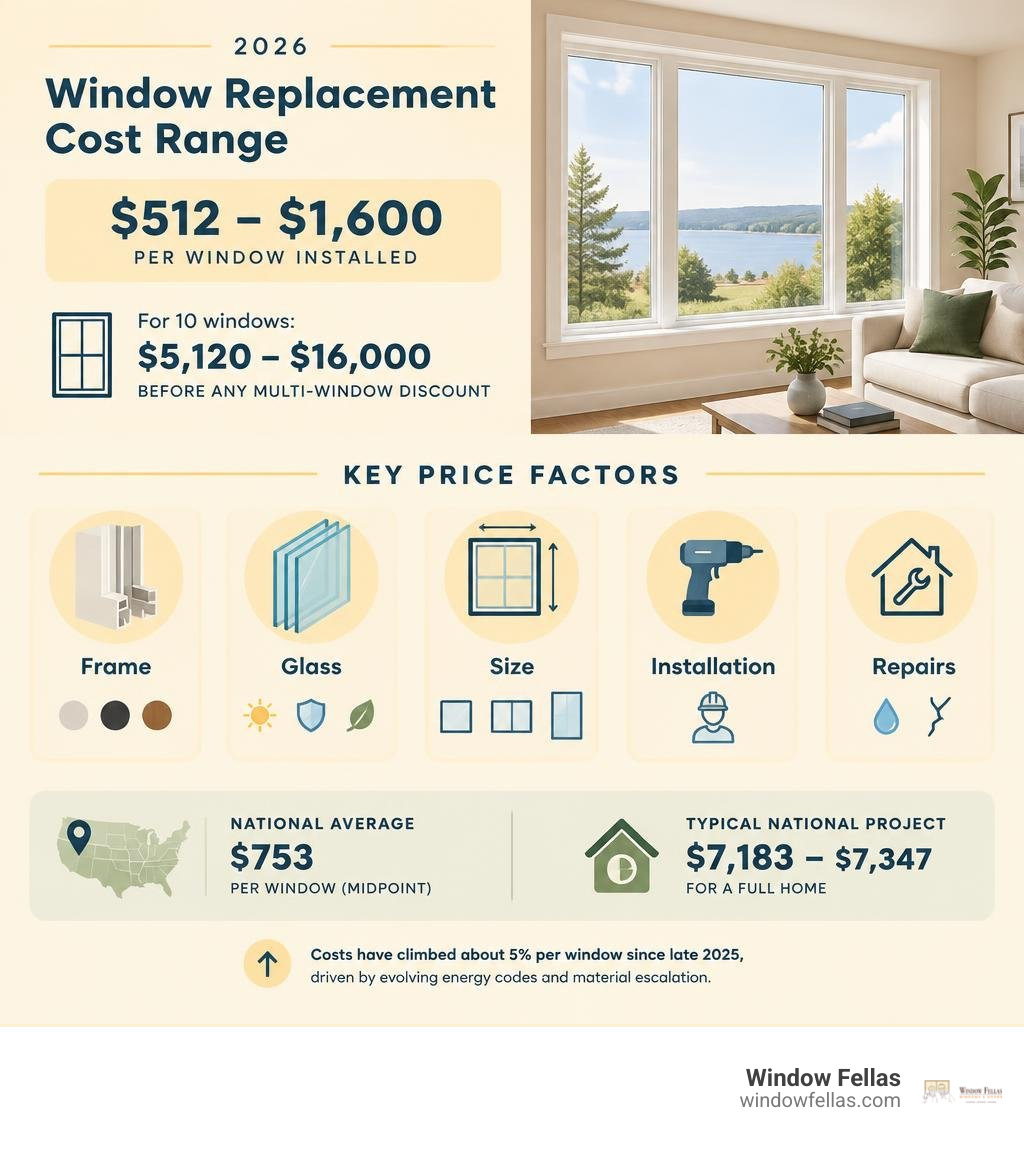
In 2026, window replacement cost typically runs $512 to $1,600 per window installed nationwide. At that range, replacing 10 windows could cost $5,120 to $16,000 before any multi-window discount. These are US national averages, published by third parties and shown here for orientation only. They are not a Window Fellas quote and not a local price — your estimate depends on the factors below.
Your estimate will depend on the frame and glass you choose, the size and style of each window, and whether the installer can keep the existing frame. In an older King County home, hidden moisture damage or rot in the opening can also change the price. A written quote should spell out installation, removal, disposal, and any work that costs extra.
Written with Krystal Amos, MSA, Co-Owner of Window Fellas in Issaquah. Her background in construction finance and job costing shapes how we explain what goes into a window replacement cost and how to plan for a clear estimate.
Average Window Replacement Cost in 2026: National vs. King County Benchmarks
When budgeting for home improvements, seeing a wide price spread can feel overwhelming. Across the United States, the midpoint for an installed replacement window sits around $753, with overall national projects averaging roughly $7,183 to $7,347. However, costs have climbed about 5% per window since late 2025, driven by evolving energy codes and material escalation.
In King County—including Bellevue, Kirkland, Redmond, Sammamish, and Issaquah—the right figure for your home comes from a measure, not from a national range. Regional building codes, moisture management requirements, and higher skilled labor rates all play a role in shaping local pricing.
Pricing per Opening and Whole-Home Estimates
Window installations are generally priced per opening. Smaller standard units require fewer materials and less labor, while complex structural openings cost more. As noted in recent 2026 window replacement cost data, scaling up the number of windows replaced during a single project helps capture volume savings and reduces per-window setup charges.
| Number of Windows | Approximate National Range (Installed) | Typical King County Budget Range (Installed) | Project Scope Notes |
|---|---|---|---|
| 5 Windows | $2,560 – $8,000 | $3,500 – $9,500 | Partial floor or single-room upgrade |
| 10 Windows | $5,120 – $16,000 | $7,000 – $18,500 | Standard mid-size home project |
| 15 Windows | $7,680 – $24,000 | $10,500 – $27,000 | Full-home replacement for mid-size residence |
| 20 Windows | $10,240 – $32,000 | $14,000 – $36,000 | Complete overhaul for larger, multi-story home |
Pacific Northwest Regional Labor and Permitting Factors
Skilled installation labor is essential to window performance. Industry installation benchmarks model basic labor around two man-hours per standard insert opening, using standard carpenter wages marked up for contractor overhead, specialized equipment, and insurance.
In King County, additional local elements influence the bottom line:
- Stringent Energy Codes: Washington State energy codes mandate strict U-factor ratings to limit thermal transfer, eliminating inefficient low-tier products.
- Weatherproofing Supplies: Our maritime climate requires premium exterior caulking, flexible flashing tape, backer rods, and low-expansion expanding foam (running $20 to $35 per opening in dedicated sealing materials alone).
- Municipal Permitting: Depending on your city jurisdiction (such as Issaquah, Bellevue, or Redmond), permit fees generally range between $50 and $300 when modifying structural rough openings or altering window sizes.
Key Factors That Determine Your Final Window Quote
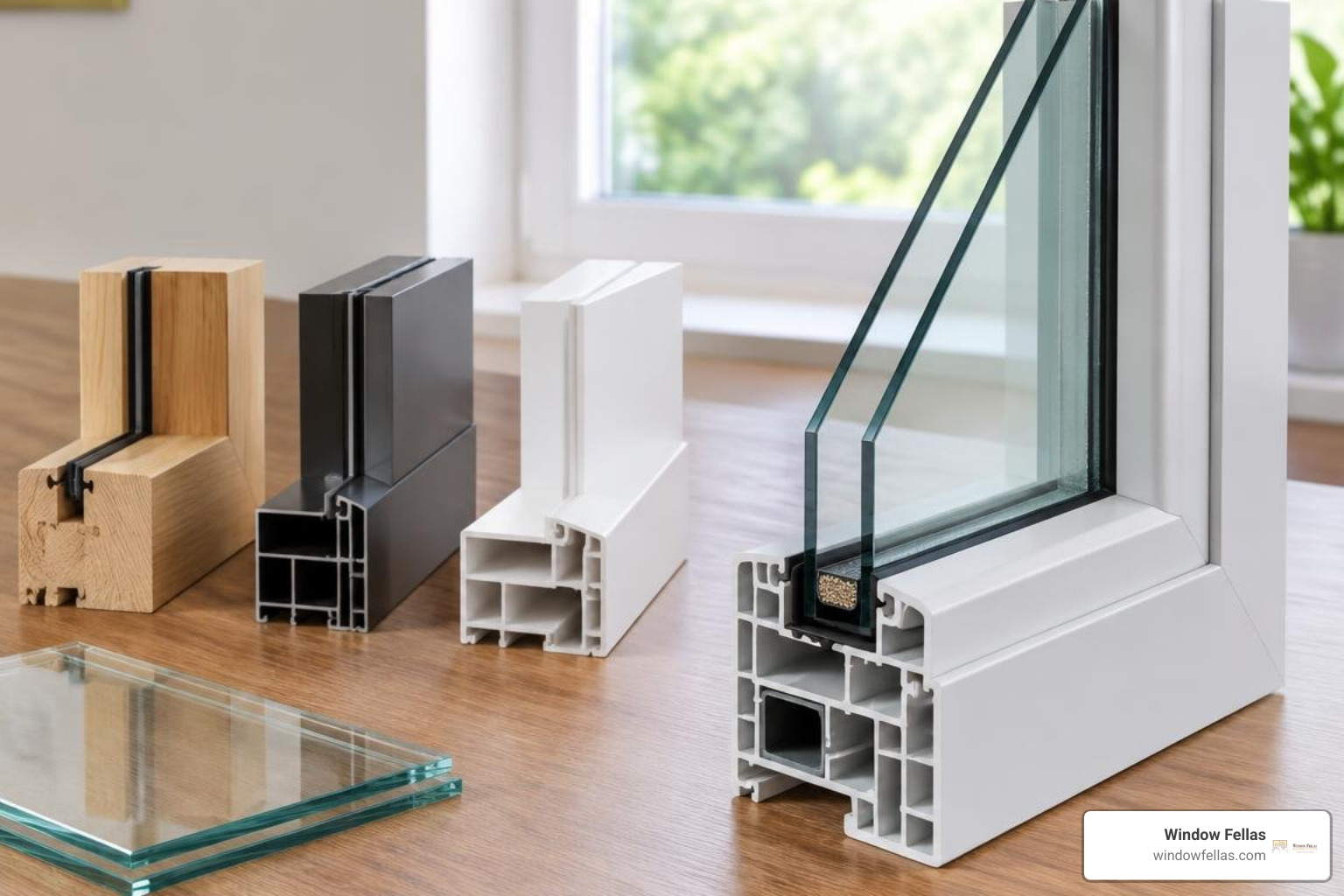
Manufacturers price custom windows using “united inches”—the sum of the window’s width plus its height. Beyond overall dimensions, every component selected for the unit alters the final price point.
How Window Frame Materials Impact Your Window Replacement Cost
The frame material you choose defines your window’s structural integrity, thermal efficiency, maintenance demands, and exterior style.
- Vinyl: Reliable vinyl window replacements offer the best balance of affordability, thermal insulation, and low maintenance, costing roughly $100 to $900 per unit for materials.
- Wood: Premium wood window replacements offer unmatched historic character and solid insulation, typically ranging from $150 to $1,300 per unit, but require routine painting and sealing to prevent rot.
- Fiberglass: Modern fiberglass window replacements provide exceptional structural stability, expand and contract minimally under Pacific Northwest temperature swings, and resist rotting or warping, running $500 to $1,500 per unit.
- Aluminum & Composites: Thermal-break aluminum ($75–$400) provides a sleek profile, while composite frames ($300–$1,200) blend recycled wood fibers and thermoplastics to resist rot and fungal decay.
| Frame Material | Material Cost Range (Per Unit) | Expected Lifespan | Maintenance Requirements | Moisture & Weather Performance |
|---|---|---|---|---|
| Vinyl | $100 – $900 | 15 – 25 Years | Very Low (Occasional cleaning) | Excellent (Impervious to rot) |
| Fiberglass | $500 – $1,500 | 30 – 40 Years | Very Low (Durable finish) | Superior (Zero warping or water absorption) |
| Composite | $300 – $1,200 | 25 – 35 Years | Low (No repainting required) | High (Rot- and decay-resistant) |
| Wood | $150 – $1,300 | 20 – 40+ Years | High (Periodic painting/staining) | Moderate (Requires active water seal) |
| Aluminum | $75 – $400 | 20 – 30 Years | Low to Moderate | High durability, but higher thermal conductivity |
Glass Packages, Glazing Options, and Energy Ratings
The Department of Energy notes that heat gained or lost through inefficient windows accounts for 25% to 30% of total residential heating and cooling energy use. Upgrading your glazing configuration is the most direct way to eliminate indoor drafts.
Detailed window energy efficiency research confirms that modern double-pane and triple-pane designs yield noticeable returns:
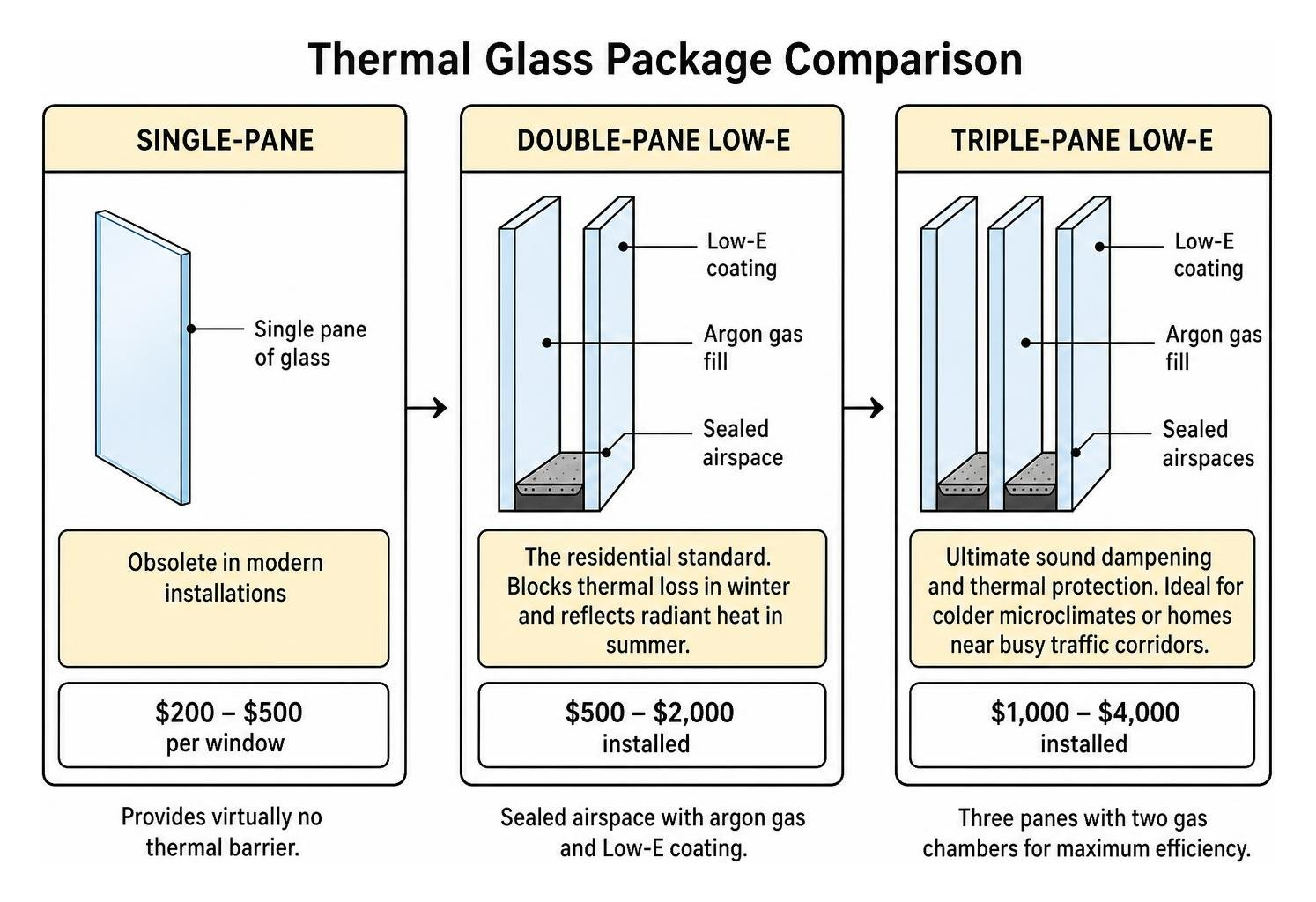
- Single-Pane ($200–$500 per window): Obsolete in modern installations; provides virtually no thermal barrier.
- Double-Pane ($500–$2,000 installed): The residential standard. Featuring a sealed airspace filled with dense argon gas and microscopic Low-E (low-emissivity) metallic coatings, double-pane glass blocks thermal loss in winter and reflects radiant heat in summer.
- Triple-Pane ($1,000–$4,000 installed): Incorporates three panes of glass and two gas chambers. It offers ultimate sound dampening and thermal protection, making it ideal for colder microclimates or homes near busy traffic corridors.
Window Styles and Architectural Openings
Window styles feature distinct operating mechanisms, hardware assemblies, and structural framing needs:
- Single-Hung ($100–$400 material): Bottom sash moves vertically; top sash stays fixed.
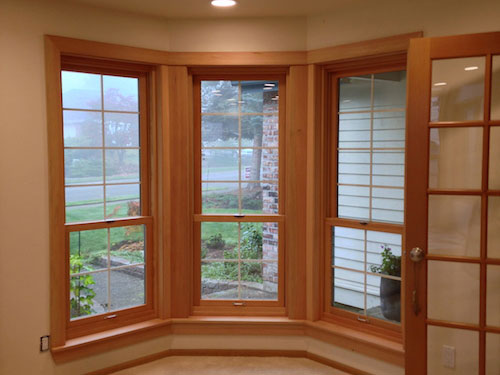
- Double-Hung ($150–$650 material): Both sashes tilt and slide, simplifying cleaning.
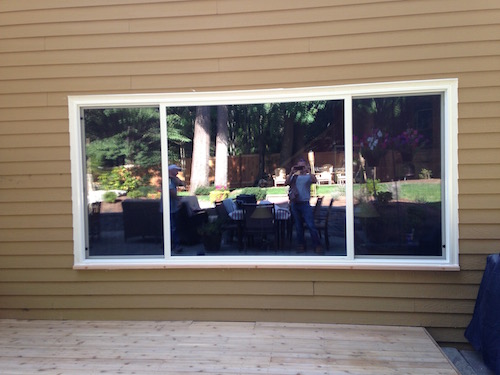
- Sliding Windows ($150–$800 material): Glides horizontally along smooth tracks.
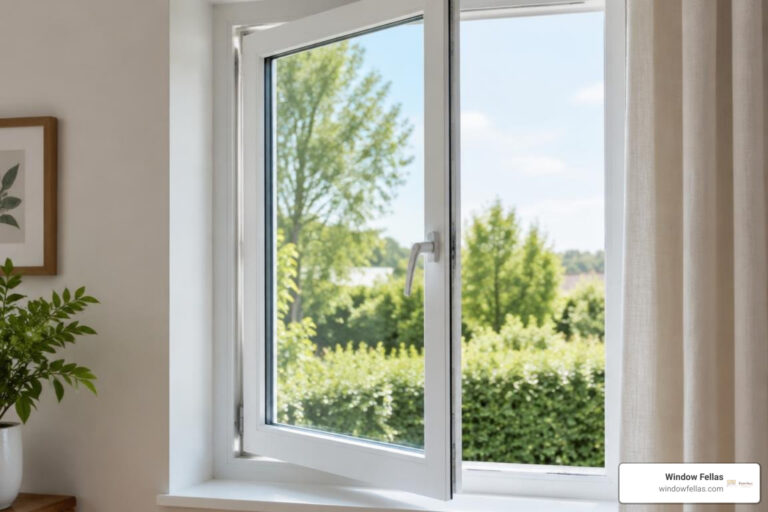
- Casement & Awning ($150–$1,000 material): Cranks outward with a compression seal, offering tight weather resistance against driving rain.
- Picture Windows ($65–$700 material): Fixed, non-opening units designed for expansive natural light.
- Bay & Bow Assemblies ($900–$7,100+ material): Multi-panel, projection structures extending out from the exterior wall that require dedicated structural support.
Installation Methods and Hidden Structural Expenses

The method used to install your new windows directly affects project labor costs and overall turnaround time.
Full-Frame vs. Retrofit Installation: Managing Your Window Replacement Cost
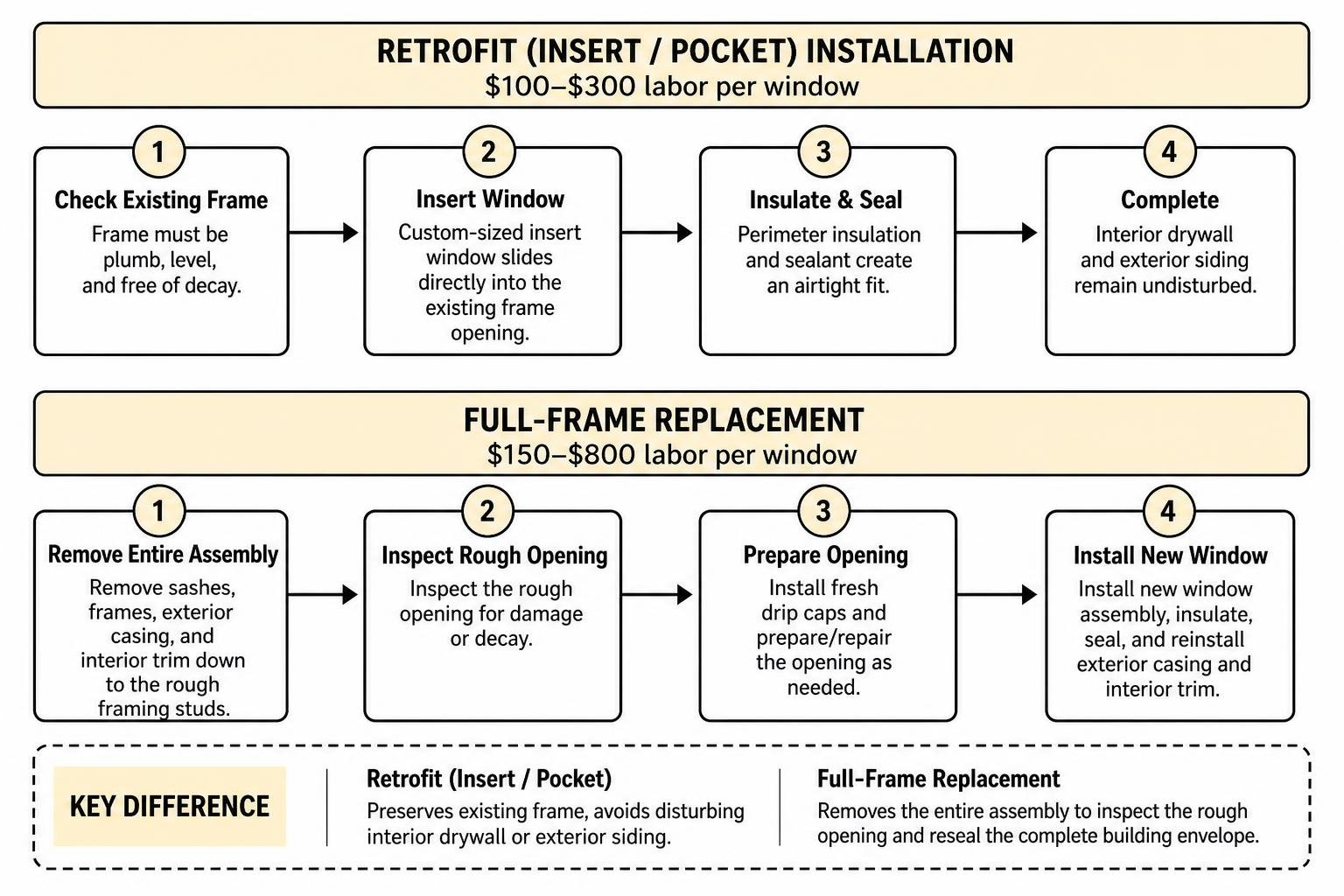
- Retrofit (Insert / Pocket) Installation ($100–$300 labor per window): If your existing wood or aluminum frame is plumb, level, and free of decay, a custom-sized insert window slides directly into the existing frame opening. This avoids disturbing interior drywall or exterior siding.
- Full-Frame Replacement ($150–$800 labor per window): When the existing frame has suffered water ingress or structural warping, the entire assembly—including sashes, frames, exterior casing, and interior trim—is stripped down to the rough framing studs. While adding 40% to 67% in installation labor, it allows technicians to inspect the rough opening, install fresh drip caps, and reseal the complete building envelope.
Addressing Moisture Damage, Siding, and Egress Requirements
Surveys show that roughly 27% of homeowners incur expenses beyond their baseline estimate, often due to hidden structural conditions.
- Dry Rot & Framing additional work: Constant dampness can cause hidden rot in sills and cripple studs, adding $100 to $2,000 in carpentry replacement work.
- Dedicated Glass Replacements: If frames are in pristine condition but an insulated unit has failed (indicated by permanent fogging between panes), opting for targeted window glass replacements ($200 to $400 per opening) can resolve the issue without requiring full unit replacement.
- Basement Safety Compliance: Converting a basement room into a legal living area requires code-compliant egress windows. These installations involve concrete cutting, excavation, and window-well construction, typically ranging from $2,000 to $5,000 per opening.
Long-Term ROI: Energy Savings, Home Value, and Financing Options
Replacing older, drafty windows provides daily comfort upgrades alongside solid financial returns.
Utility Bill Reductions and Resale Value Returns
Upgrading from failing single-pane units to modern ENERGY STAR certified models saves homeowners an average of 12% to 15% on annual heating and cooling expenses. In the Pacific Northwest, where heating systems run for much of the year, stopping convective air drafts creates noticeable month-to-month savings.
From a property value perspective, national cost recovery insights show homeowners recoup approximately 70% to 85% of their investment upon resale. Modern windows enhance curb appeal, elevate real estate listing photos, and reassure buyers regarding future maintenance.
Strategic Upgrades, Rebates, and Payment Plans
Homeowners can optimize their project investment through several proven approaches:
- Off-Peak Scheduling: Booking projects during late fall or winter can reduce project lead times and access seasonal promotional incentives.
- Utility & Tax Incentives: Puget Sound Energy (PSE) and local utility providers periodically offer per-window cash rebates for qualifying high-efficiency upgrades.
- Tailored Payment Solutions: Exploring flexible financing plans allows you to tackle whole-home upgrades at once, securing volume pricing without draining emergency reserves.
Frequently Asked Questions About Window Replacement Costs
Is it cheaper to replace all windows at once?
Yes. Replacing 10 or more windows during a single phase reduces per-unit labor costs. Installers mobilize staging equipment, drop cloths, and disposal trailers just once, spreading base setup overhead across the entire project.
What is the most cost-effective window frame material?
Vinyl frames remain the overall value leader. They are impervious to moisture, require no ongoing painting or staining, provide solid thermal insulation via multi-chambered profiles, and carry a lower initial purchase price than fiberglass or wood.
When should I choose replacement over full replacement?
If your window issues are limited to worn weatherstripping, a stuck latch, or broken hardware, a low-cost replacement is your best route. However, if frames show soft wood rot, deep structural racking, persistent drafts across multiple joints, or severe moisture intrusion behind the trim, full replacement is the right long-term fix.
Conclusion
Planning your window project starts with clear pricing data and an honest evaluation of your home’s structural needs. In King County, securing durable materials and weather-tight installation protects your property from the elements year-round.
At Window Fellas, our direct approach sets us apart. We deliver installer-led consultations without high-pressure sales reps or third-party subcontractors. Every project is completed by experienced professionals and supported by our lifetime labor warranty alongside full manufacturer coverage since 2010.
Ready to explore your options with clear, dependable guidance? Review our comprehensive window replacement service to schedule your consultation and get a precise, itemized plan for your home.